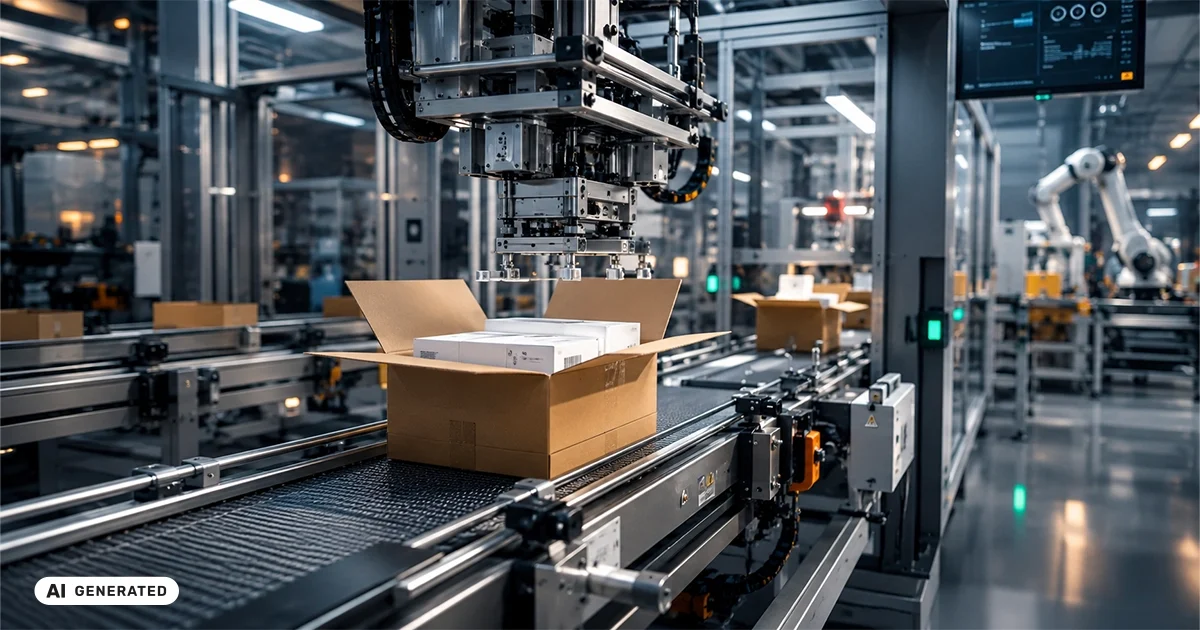
It was a chilly Tuesday night in November, shortly before 3 a.m., when my phone rang. On the other end of the line was the production manager of a medium-sized contract bottler. His voice sounded extremely tense. The main shaft of a high-speed cartoning machine, only three years old, had broken without warning. The entire production line had ground to a halt. The cost of the production downtime? A mid-five-figure sum – per hour.
When we analyzed the damage a few days later in our engineering office, our initial suspicion was confirmed: a classic fatigue fracture. According to standard, purely static criteria, the broken shaft was massively over-engineered. Theoretically, it should have lasted indefinitely. In practice, however, the millions of tiny load cycles, combined with an inconspicuous notch at the shaft shoulder, led to catastrophic failure.
This real-life incident underscores an undeniable truth that we at Neertex have repeatedly emphasized based on years of experience: When it comes to dynamically stressed systems, estimation or rough calculations are not an option. At this point, calculation according to the FKM guideline transforms from an optional luxury into an absolute necessity for any serious machine manufacturer.
The invisible danger in continuous production: When estimation is no longer enough
Packaging machines are the tireless marathon runners of industry. While a bridge (apart from wind and traffic loads) primarily bears its own weight and is therefore subject to a more static load, the world in a modern bottling plant is completely different.
A modern cartoner or blister machine processing 400 to 600 units per minute undergoes hundreds of thousands of load cycles in a single shift. We're talking about highly dynamic accelerations, constant vibrations, and abrupt braking. By 2026, cycle times will be higher than ever before, as global demand for consumer goods requires more efficient supply chains.
Traditional calculation methods that only consider the yield strength or tensile strength of a material fail under such loads. A component may be statically "safe" but still shatter like glass after five million load cycles. The reason for this is so-called material fatigue.
The marathon comparison
Imagine a world-class sprinter. He has enormous maximum strength to cover the 100 meters in record time. That's your static strength. But if you force this sprinter to run an ultramarathon, his joints and muscles will eventually give out, despite his strength. He's not designed for that kind of sustained stress. It's similar with machine elements: without a detailed fatigue strength calculation, you'd send a sprinter out on a marathon course.
What exactly is behind the FKM guideline?
To make the problem of material fatigue tangible and calculable, the FKM guideline was created. Published by the Research Association for Mechanical Engineering (FKM) , this set of rules is now considered the undisputed gold standard for the computational verification of the strength of machine components.
The calculation according to the FKM guideline is essentially a highly complex, analytical algorithm. It takes the existing stresses in a component and does not simply compare them to the catalog strength of the steel. Instead, the guideline modifies the material's strength based on numerous real-world influences:
- The influence of size: Statistically speaking, a thick steel component has more microscopic defects than a thin sheet of metal and is therefore more prone to cracking.
- The roughness factor: A mirror-polished shaft can withstand dynamic loads for significantly longer than a roughly milled surface, as small grooves can serve as starting points for cracks.
- Medium voltage: It makes a huge difference whether a component constantly alternates between tension and compression (purely pulsating) or whether a constant base load is applied that only varies slightly.
Historical context and current standards
This guideline didn't emerge overnight. It's based on decades of research, countless tensile tests, and continuous development by institutions like the VDMA (German Engineering Federation). With the current 7th edition and the supplementary volume on nonlinear material behavior, it has reached a level of precision that takes even the smallest deformation reserves in the material into account.
Design and simulation according to FKM guidelines: The perfect duo for maximum safety
At our engineering office at Neertex, we don't rely on pen and paper to calculate these complex algorithms. The real magic happens when we combine theoretical formulas with state-of-the-art computer technology. This is what we call design and simulation according to FKM guidelines.
In practice, the process looks like this: First, we create a digital twin of your component and virtually subject it to the forces that occur in your packaging machine. This is done using our specialized FEM simulation (Finite Element Method).
The FEM provides us with a high-resolution, color-coded stress image. However, red areas on a monitor do not automatically mean that the component is breaking. They merely indicate local stress peaks. In the next step, we take precisely this stress data from the FEM and pass it to the algorithms of the FKM guideline.
The FKM guideline is essentially a high-resolution MRI scan for your design, whereas conventional, blanket safety factors are more like a blurry X-ray image. Only by combining simulation and FKM verification can we obtain a legally sound, verifiable, and 100% reliable result over the component's entire lifespan.
The pitfalls of the design: notch effect and local stresses
Let's get a little technical to understand why the FKM guideline is so ingenious. One of the biggest problems in mechanical engineering is the so-called notch effect.
Every engineer is familiar with this principle from everyday life: Try tearing a smooth sheet of paper in half. You'll need a fair amount of force. Now, however, make a tiny, millimeter-sized tear in the top edge of the paper. If you pull now, the sheet will tear almost effortlessly at precisely this point. The applied force has been concentrated at the "notch."
Packaging machines are full of such "cracks" in the form of design details due to manufacturing constraints: keyways, cross holes for cotter pins, sharp shaft shoulders, undercuts, or welds. Extreme local stress concentrations occur precisely at these notches. Calculation according to the FKM guideline is the only standardized method that tells you exactly whether the local stress concentration at your weld is harmless because the material is supported plastically (the so-called "plastic support coefficients"), or whether a fatal crack will develop there in three weeks.
Counterarguments examined: Does FKM make machines too heavy and expensive?
As an engineering firm, we have many discussions with manufacturers. A frequently heard argument is: “If we calculate strictly according to FKM, the program gives us such high safety factors that our components become twice as heavy and expensive to manufacture. We can't afford that in a competitive market.”
This perspective is perfectly understandable, but it's based on a misunderstanding. Yes, if the FKM guideline is applied conservatively and inflexibly, components can become heavier. But the reality of professional design and simulation according to the FKM guideline is completely different.
Lightweight construction through precision
In fact, the FKM guideline is the biggest enemy of bulky, oversized designs. Previously, designers would add a "fear factor" of 3,0 or 4,0 to the component, just to be on the safe side. This resulted in massive, expensive castings.
The FKM calculation allows us to reduce the safety factor to a scientifically sound minimum (often in the range of 1,2 to 1,5) because we know the component's behavior precisely. The calculation allows us to pinpoint exactly where the component is completely under-stressed. In these areas, we can save material, weight, and therefore significant costs. We then invest these savings specifically in the critical notches where the material is truly needed.
This targeted design is directly incorporated into our manufacturability-oriented layout and mechanical construction . The result is a packaging machine that is lighter, more dynamic, more cost-effective to manufacture, and simultaneously more reliable. A clear competitive advantage.
Real-world scenarios: When reliability becomes a matter of survival
Let's look at another real-world example. Packaging machines aren't always located in climate-controlled halls in Central Europe. Sometimes the conditions are extreme.
In the past, we have worked on international projects – such as packaging systems operating under extreme climatic conditions in the Dubai area . When a labeling machine runs continuously at an ambient temperature of 60°C and high humidity, the material properties of steels and especially plastics change significantly. Fatigue strength decreases.
In such scenarios, gut feeling is fatal. FKM calculations allow us to explicitly incorporate the influence of temperature into the algorithms. We not only demonstrate that the machine functions in Germany, but we also provide documented, calculated proof that it maintains its timing even after years in desert heat, without drive shafts breaking due to fatigue.
Research and future prospects in 2026
The year is 2026, and mechanical engineering has developed rapidly. Topics such as predictive maintenance and the "digital twin" are no longer just buzzwords at trade fairs, but a reality in plant engineering.
But there's a catch that many software enthusiasts overlook: The best artificial intelligence and the most expensive digital twin are completely useless if the underlying physical model is flawed. AI algorithms need a reliable baseline to be able to infer the remaining lifespan of a component from sensor data (such as vibrations or motor currents).
This baseline is provided by the calculation according to the FKM guideline . It forms the physical foundation on which modern IoT systems are built. If the FKM model has precisely calculated that a lever will exhibit a certain accumulation of damage after 10 million cycles, the sensors can compare this in real time and plan maintenance with pinpoint accuracy before a catastrophic failure occurs.
Sustainability through durability
Furthermore, environmental considerations play a crucial role. In times of high material prices and stringent CO2 accounting, we can no longer afford "disposable machine construction." Every kilogram of steel or aluminum that we save through intelligent FKM design reduces the carbon footprint of your system. At the same time, machine-life-long durability means fewer spare parts need to be produced and shipped halfway around the world. Efficiency and environmental protection go hand in hand here.
Conclusion: Your packaging machine deserves better than estimated values.
Developing packaging machines is a highly complex balancing act between speed, precision, cost pressure, and reliability. A cracked shaft, a broken lever, or a failing hinge not only costs money but also your customers' trust.
Calculations according to the FKM guideline are far more than just a formal requirement for technical documentation. They are a strategic tool. They protect you from costly complaints, enable innovative lightweight construction, and are the physical prerequisite for the intelligent machines of the future.
At Neertex, we see ourselves not just as a computing service provider, but as your development partner. With our in-depth expertise in design and simulation according to FKM guidelines, we support you from the initial concept sketch to a certified, fail-safe system. Don't leave the durability of your machines to chance or rough estimates. Let's work together to design machines that are not only fast, but also built to last.
Individual consulting

Malte Güttner
Mechanical Engineer (M.Eng.)